September 22, 2026 Post by : Editorial Field Skills
Listening to a Place: An Introduction to Sound Mapping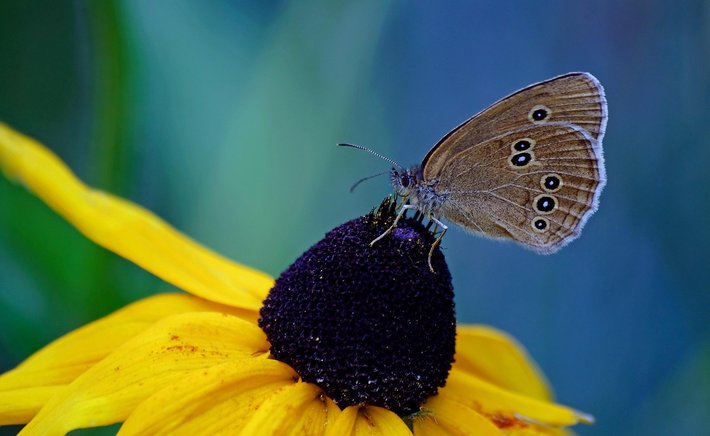
If you want to observe wildlife but live somewhere without much of it — a city, a suburb, a plain apartment courtyard — insects are your answer. They're the most diverse group of animals on the planet, they're active from spring through fall in most places, and a single square meter of garden can hold dozens of species. You don't need to travel anywhere. You just need to get close.
That closeness is exactly what a journal is for. Insects are small, fast, and easy to lose track of, so sketching them forces you to slow down and look at parts you'd otherwise miss — the joints of a leg, the pattern on a wing, the way the antennae bend.
Finding and Watching Without Disturbing
Start where the flowers are. A patch of blooming plants is a magnet for bees, flies, beetles, and butterflies, and they'll often tolerate a careful observer standing nearby. Move slowly, avoid casting a shadow directly over them, and resist the urge to poke. The best observation happens when the insect forgets you're there.
Get low. Most insects live at ground level, and the world looks completely different from a crouch. Flip over a flat rock or a piece of bark and you'll find beetles, millipedes, and other creatures that spend their lives in the dark. Look under leaves for eggs and caterpillars. Watch a patch of bare dirt for ants and ground beetles. If you're patient, you can also set out a simple pitfall trap — a cup sunk into the ground with its rim level to the surface — to see what's wandering at night.
The trick is to observe behavior, not just appearance. Is the bee collecting pollen, and how does it carry it? Is the butterfly basking with wings open, or holding them closed? Is the ant following a trail? These details are what make a journal entry interesting six months later.
Sketching What You Can't Quite See
Insects rarely hold still, so don't try to draw a finished portrait in one sitting. Instead, sketch in stages. Start with the overall shape and proportion. Add the major body regions — head, thorax, abdomen — and then the legs and wings. If the insect moves, wait. It will usually return to a similar pose, and you can pick up where you left off.
A hand lens or a cheap macro clip for your phone helps enormously for details you can't see with the naked eye: the hairs on a bee's abdomen, the veins in a dragonfly's wing, the tiny antennae of a fly. Sketch what you see through the lens, even roughly, and label the parts with arrows.
Don't worry about perfection. The point is the record. Note the date, the plant the insect was on, and the weather — many insects are only active in certain conditions. Over a season, you'll build a personal field guide to the small wildlife in your own patch, and you'll start seeing the garden as a busy, layered habitat rather than a quiet green backdrop.

Author

22 feb,2025
This incident opened my eyes to the value of Insurance in general, so I decided to examine my personal and business insurance.



Comment (3)
The payments are made directly from one person to another without passing through a central bank or clearing house.
22 feb,2025
ReplySketching Insects Up Close: A Beginner's Guide to the Smallest Wildlife
23 feb,2025
ReplyThe Sit Spot Habit: Why Staying in One Place Beats Hiking Far
23 feb,2025
Reply