September 16, 2026 Post by : Editorial Weather and Sky
Your First Phenology Calendar: Tracking Nature's Timing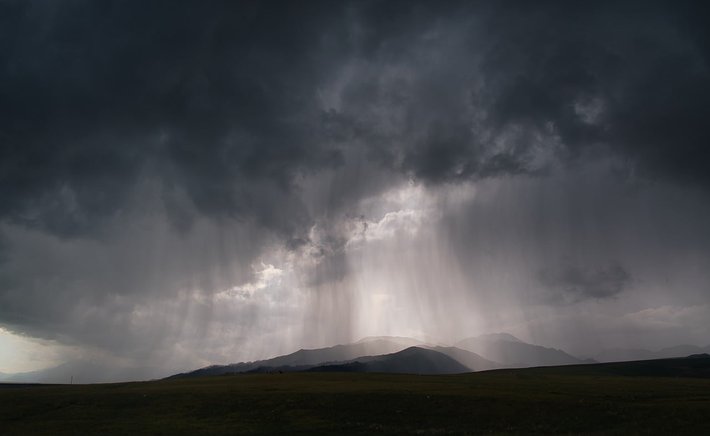
Every nature journal has its share of birds, flowers, and insects, but the most underrated subject in the sky is the sky itself. Clouds are free, they never migrate away for the season, and they change every single day. For the amateur naturalist who wants to build observation skills quickly, clouds are the perfect training ground.
You do not need to become a meteorologist to enjoy them. You just need to start noticing. The first step is learning to recognize a handful of basic forms. Cumulus — those puffy, cotton-ball clouds with flat bottoms — are the ones children draw. Stratus hang low and grey, flattening the light. Cirrus streak high and wispy, like brushstrokes pulled thin. Cumulonimbus tower and darken, building toward thunder. That is enough vocabulary to begin.
Once you can name what you see, the real fun starts. Clouds become characters in a story that unfolds across the day. A morning of clear blue gives way to cumulus by noon, which pile up by afternoon, which may or may not collapse into rain by evening. Watching that arc is like watching a tide come in.
Keeping a Sky Journal
A sky journal does not need to be elaborate. Set aside a few minutes each day — morning, noon, or evening, whichever fits — and record three things: the cloud type, the amount of sky covered, and the direction the wind seems to be pushing things. Add a quick sketch if you like. Even a rough scribble of shapes will sharpen your eye faster than words alone.
After a few weeks, patterns emerge. You may notice that cirrus in the morning often precedes a change in weather by a day. You may see that certain cloud formations appear before your local afternoon storms. These are not scientific predictions — they are your predictions, built from your own patch of sky, and that is what makes them valuable.
Photographing clouds is another lovely habit. The same formation at sunrise and sunset looks entirely different, and a phone camera is plenty. Keep a folder of your sky photos alongside your written notes. Over a year, you will have a portrait of your local atmosphere that no weather app can match.
What Clouds Teach the Observer
Cloud-watching trains a specific kind of attention that carries over into everything else you observe outdoors. Clouds refuse to hold still. They demand that you look up, look again, and accept that what you saw a moment ago is already gone. That is excellent practice for watching birds, insects, and any other living thing that will not wait for you to finish your sketch.
Clouds also remind us that the outdoors is not just a collection of creatures. It is a system — light, water, air, and temperature all moving together. When you start to see clouds as part of that system, you begin to understand why the swallows are flying low, why the flowers closed early, why the air smells like rain.
Step outside tomorrow and look up. Write down what you see. That is your first entry in a journal that will never run out of material.

Author

22 feb,2025
This incident opened my eyes to the value of Insurance in general, so I decided to examine my personal and business insurance.


Comment (3)
The payments are made directly from one person to another without passing through a central bank or clearing house.
22 feb,2025
ReplyThe Art of the Slow Walk: Covering Less Ground, Seeing More
23 feb,2025
ReplyYour First Phenology Calendar: Tracking Nature's Timing
23 feb,2025
Reply